Looking for a reliable Salesforce managed services provider? Discover how expert support can transform your CRM strategy, boost efficiency, and drive real business growth—without the headaches.
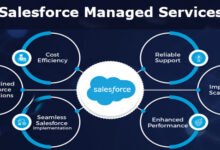
What Is a Salesforce Managed Services Provider?

A Salesforce managed services provider (MSP) is a specialized IT partner that offers ongoing support, maintenance, optimization, and strategic guidance for your Salesforce environment. Unlike one-time consultants, these providers deliver continuous value by ensuring your CRM platform runs smoothly, securely, and in alignment with your business goals.
Core Definition and Role
The primary role of a salesforce managed services provider is to act as an extension of your internal team, managing everything from routine administration to complex integrations. They handle day-to-day operations so your staff can focus on core business functions.
- 24/7 system monitoring and support
- User management and permission audits
- Performance tuning and optimization
According to Salesforce’s official documentation, organizations that leverage managed services report up to 40% higher user adoption rates due to consistent support and training (Salesforce, 2023).
How It Differs From Traditional Consulting
While traditional consultants offer project-based solutions—such as initial Salesforce implementation or migration—a managed services provider delivers long-term, proactive engagement.
- Consulting: Short-term, goal-specific projects (e.g., setup, customization)
- Managed Services: Ongoing operational support, updates, security, and strategy
“A managed services provider doesn’t just fix problems—they prevent them before they happen.” — Gartner Research, 2022
Top 7 Benefits of Hiring a Salesforce Managed Services Provider
Partnering with a qualified salesforce managed services provider brings measurable advantages across your organization. From cost savings to enhanced scalability, the benefits are both strategic and operational.
1. Reduced Operational Costs
One of the most compelling reasons companies turn to managed services is cost efficiency. Instead of hiring full-time administrators, developers, and security experts, businesses can outsource these functions at a fraction of the cost.
- No need for expensive in-house Salesforce talent
- Fixed monthly pricing models improve budget predictability
- Lower risk of costly downtime or data breaches
For example, a mid-sized company spending $150,000 annually on internal CRM staff could reduce expenses by 30–50% by switching to a managed service model (Forrester, 2021).
2. Continuous System Optimization
Your Salesforce instance isn’t static—it evolves with your business. A managed services provider ensures your platform remains optimized through regular performance reviews, cleanup of unused data, and automation enhancements.
- Quarterly health checks and optimization reports
- Workflow automation improvements
- Database de-duplication and storage optimization
This ongoing tuning leads to faster load times, better reporting accuracy, and improved user experience.
3. Proactive Security and Compliance Management
Data security is non-negotiable in today’s regulatory landscape. A top-tier salesforce managed services provider implements robust security protocols to protect sensitive customer information.
- Regular vulnerability assessments and penetration testing
- Automated backup and disaster recovery planning
- Compliance with GDPR, HIPAA, CCPA, and other standards
They also ensure that user permissions are correctly assigned and reviewed periodically, minimizing insider threats.
Key Services Offered by a Salesforce Managed Services Provider
Understanding what services a salesforce managed services provider offers is crucial when evaluating potential partners. These services go beyond basic troubleshooting and include strategic, technical, and administrative support.
Administrative Support and User Management
Effective Salesforce management starts with proper user governance. Providers handle onboarding, role configuration, profile assignments, and permission sets.
- Create and deactivate user accounts based on HR workflows
- Implement role hierarchies and sharing rules
- Conduct quarterly access reviews
This ensures that employees only have access to the data they need, reducing security risks and improving compliance.
Technical Maintenance and Upgrades
Salesforce releases three major updates per year, each introducing new features and deprecating older ones. A managed services provider ensures your org is always up-to-date and compatible.
- Pre-upgrade testing in sandbox environments
- Post-upgrade validation and issue resolution
- Custom code refactoring to meet new API requirements
They also manage patch deployments, performance monitoring, and integration health checks.
Integration and Automation Management
Most businesses use Salesforce alongside other systems like ERP, marketing automation, or customer support platforms. A salesforce managed services provider ensures these integrations remain stable and efficient.
- Maintain MuleSoft, Informatica, or custom API integrations
- Monitor integration logs for errors and latency
- Optimize workflows using Flow, Process Builder, or Apex triggers
When integrations fail, they respond quickly to minimize data loss or workflow disruption.
How to Choose the Right Salesforce Managed Services Provider
Selecting the right partner is critical to maximizing your ROI. Not all providers are created equal, and choosing based solely on price can lead to poor service quality and technical debt.
Evaluate Certifications and Expertise
Look for a provider with certified Salesforce professionals on staff, including:
- Salesforce Administrator (ADM-201)
- Salesforce Developer (DEV-401 or DEV-501)
- Architect certifications (e.g., Technical or Solution Architect)
You can verify credentials through the Salesforce Trailhead Certification Portal. A team with diverse certifications indicates a well-rounded skill set capable of handling complex challenges.
Assess Experience Across Industries
Providers with experience in your specific industry—such as healthcare, financial services, or retail—are more likely to understand your unique compliance and process needs.
- Ask for case studies or client references in your sector
- Inquire about industry-specific solutions they’ve implemented
- Check if they’ve worked with similar company sizes
For instance, a provider experienced in healthcare will be familiar with HIPAA-compliant data handling practices within Salesforce Health Cloud.
Review Service Level Agreements (SLAs)
A clear SLA defines response times, uptime guarantees, and escalation procedures. Ensure the provider offers:
- 24/7 support with guaranteed response times (e.g., 1 hour for critical issues)
- Regular reporting on system performance and incident resolution
- Transparent pricing with no hidden fees
A strong SLA protects your business and sets clear expectations for service delivery.
Common Challenges Without a Salesforce Managed Services Provider
Many organizations attempt to manage Salesforce internally, only to face growing pains as their platform usage expands. Understanding these pitfalls highlights the value of professional managed support.
System Downtime and Performance Issues
Without proactive monitoring, performance bottlenecks can go unnoticed until they impact users. Common issues include slow report generation, API timeouts, and failed batch jobs.
- Lack of real-time alerting leads to delayed problem detection
- Unoptimized queries can degrade system performance
- Storage limits may be exceeded without warning
A salesforce managed services provider uses tools like Salesforce Optimizer and custom dashboards to detect and resolve issues before they affect productivity.
Data Integrity and Security Risks
Poor data governance is a silent killer of CRM effectiveness. Duplicate records, outdated contact information, and inconsistent field usage reduce trust in the system.
- Manual data entry errors accumulate over time
- Insufficient backup strategies increase risk of data loss
- Over-permissioned users can expose sensitive data
Managed providers implement data quality rules, automated cleansing scripts, and role-based access controls to maintain integrity and security.
Limited Scalability and Innovation
As your business grows, so should your CRM. Internal teams often lack the bandwidth or expertise to scale Salesforce effectively.
- Customizations become technical debt if not properly documented
- New features introduced by Salesforce go underutilized
- Integration with new tools takes longer than expected
With a managed services partner, you gain access to innovation roadmaps and scalable architecture planning.
Real-World Use Cases: Success Stories with a Salesforce Managed Services Provider
Let’s explore how real companies have benefited from partnering with a salesforce managed services provider.
Case Study 1: Global Retailer Improves Customer Service
A multinational retail chain struggled with disjointed customer data across regions. After engaging a managed services provider, they consolidated their Salesforce orgs into a unified global instance.
- Reduced average case resolution time by 45%
- Increased first-call resolution rate by 30%
- Enabled real-time inventory visibility for customer service reps
The provider also implemented Einstein AI for case routing and automated SLA tracking.
Case Study 2: SaaS Company Accelerates Sales Cycles
A fast-growing software-as-a-service company faced bottlenecks in lead management and forecasting. Their internal team lacked bandwidth to optimize Salesforce Sales Cloud.
- Implemented lead scoring and routing automation
- Integrated Salesforce with HubSpot and ZoomInfo
- Created dynamic dashboards for real-time pipeline visibility
Result: Sales cycle shortened by 22%, and forecast accuracy improved by 38% within six months.
Case Study 3: Healthcare Organization Achieves HIPAA Compliance
A U.S.-based healthcare provider needed to ensure their Salesforce Health Cloud deployment met strict HIPAA requirements.
- Conducted full security audit and gap analysis
- Implemented field-level encryption and audit trails
- Established secure integration with electronic health record (EHR) systems
The salesforce managed services provider also trained staff on compliance protocols and conducted annual re-certification audits.
Future Trends in Salesforce Managed Services
The landscape of Salesforce managed services is evolving rapidly, driven by advancements in AI, automation, and cloud architecture. Staying ahead of these trends ensures your business remains competitive.
Rise of AI-Powered Support and Automation
Artificial intelligence is transforming how managed services are delivered. Providers now use AI to predict system issues, automate routine tasks, and enhance user support.
- Predictive analytics for identifying performance degradation
- Chatbots for Tier-1 user support and password resets
- AI-driven recommendations for process improvements
Salesforce’s own Einstein AI is being integrated into managed service offerings to provide smarter insights and automation.
Increased Focus on Multi-Cloud Integration
As businesses adopt hybrid and multi-cloud strategies, managed services providers are expanding their expertise beyond Salesforce to include AWS, Microsoft Azure, and Google Cloud integrations.
- Secure data synchronization across cloud platforms
- Unified identity management (SSO, SAML)
- Centralized monitoring and logging
This holistic approach ensures seamless data flow and operational continuity.
Shift Toward Outcome-Based Service Models
Instead of charging for hours or tickets, some providers are moving to outcome-based pricing—where fees are tied to measurable business results like increased conversion rates or reduced churn.
- Performance-based contracts aligned with KPIs
- Shared risk and reward models
- Transparent reporting on business impact
This shift fosters deeper partnerships and aligns the provider’s success with the client’s goals.
What does a Salesforce managed services provider do?
A Salesforce managed services provider offers ongoing support, maintenance, optimization, and strategic guidance for your Salesforce environment. This includes user management, system monitoring, security, upgrades, integrations, and performance tuning to ensure your CRM delivers maximum value.
How much does it cost to hire a Salesforce managed services provider?
Costs vary based on organization size and service scope, but typical plans range from $1,500 to $10,000+ per month. Many providers offer tiered packages (Basic, Professional, Enterprise) with fixed pricing for predictable budgeting.
Can a managed services provider help with Salesforce implementation?
Yes, many salesforce managed services provider firms offer end-to-end implementation services, including requirements gathering, data migration, customization, testing, and training—followed by ongoing support.
Is it better to manage Salesforce in-house or use a managed service?
For most mid-sized to large organizations, using a managed service is more cost-effective and reliable. It provides access to specialized expertise, reduces operational burden, and ensures continuous optimization—something difficult to achieve with limited internal resources.
How do I know if my Salesforce environment needs managed services?
If you’re experiencing frequent downtime, low user adoption, security concerns, or lack the bandwidth to maintain and improve your CRM, it’s likely time to consider a managed services provider. A free system health check from a provider can help assess your current state.
Partnering with a skilled Salesforce managed services provider is no longer a luxury—it’s a strategic necessity for businesses aiming to maximize their CRM investment. From reducing costs and enhancing security to enabling innovation and scalability, the benefits are clear and measurable. By choosing the right provider, you gain a trusted partner committed to your long-term success. Don’t let technical complexity hold your business back—empower your Salesforce platform with expert managed support today.
Recommended for you 👇
Further Reading:
